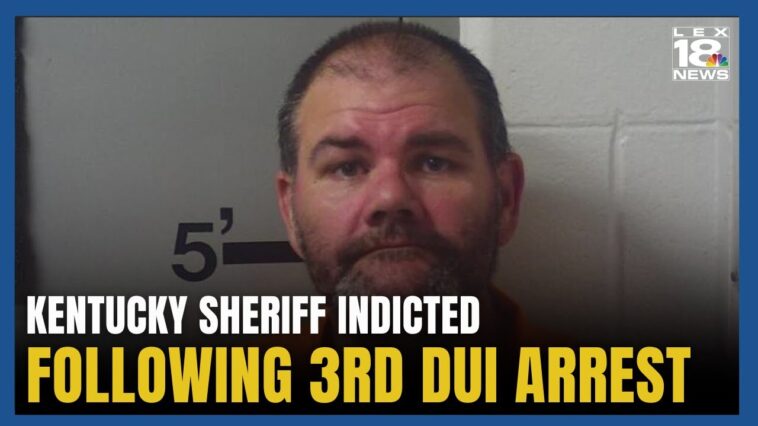

Law Enforcement Accountability Under Scrutiny
The recent incident involving Robertson County Sheriff Terry Gray, who was arrested for his third DUI offense in under two years, has ignited widespread debate about accountability among law enforcement officers in Kentucky. As a legal observer with extensive experience in public policy and legal ethics, I aim to take a closer look at this situation and the tangled issues it raises for those tasked with upholding the law.
The arrest followed a dramatic pursuit that saw speeds reaching up to 110 mph, during which Gray allegedly activated his official police lights and siren. The pursuit ended under chaotic circumstances when he nearly collided with another law enforcement vehicle, leaving many to question how a sworn officer could be entangled in such dangerous behavior on the road.
Understanding Repeated DUI Offenses and Legal Consequences
The case of Sheriff Gray brings forth several key questions about repeat DUI offenses by law enforcement personnel. The legal framework in Kentucky for handling DUI arrests is designed to ensure that individuals, regardless of their positions, are held accountable. However, this case reveals some of the twisted aspects and hidden complexities when it comes to applying these standards consistently within law enforcement agencies.
DUI Offenses: The Law and Its Application
Kentucky’s DUI laws were initially established to protect public safety, but when an officer who is entrusted with enforcing these laws repeatedly finds himself on the wrong side of the law, it creates a ripple effect of conflicting standards. When you take a closer look at this situation, the following points emerge:
- Legal Expectations: Law enforcement officers are held to a super important set of guidelines designed not only to protect the public but also to maintain trust in the justice system.
- Repeat Offenses: When an officer is charged multiple times for DUI, it raises questions about internal oversight and the processes used to manage problematic behavior.
- Consequences of Misconduct: Legal consequences must be followed even when the offender is a person of authority, reflecting a need for a level playing field when it comes to the application of the law.
This pattern of repeated offenses in the case of Sheriff Gray—despite his previous arrests—suggests that the system may be struggling with some tricky parts in enforcing accountability among its own ranks. The situation underscores how even those charged with upholding the law can sometimes get caught in a web of their own doing.
The Governor’s Ultimatum and Its Broader Implications
Governor Andy Beshear’s decision to demand the resignation of Sheriff Gray—or face immediate termination—sends a clear message about the political and legal expectations for public safety officers in Kentucky. The ultimatum issued by the Governor’s office illustrates the high stakes involved in maintaining public trust.
The Role of Executive Authority in Law Enforcement Oversight
In any effective legal system, executive oversight plays a key role in ensuring that law enforcement officers are not only well-equipped to perform their duties but also held to a high standard of conduct. Here are some important points to consider:
- Political Pressure: The Governor’s intervention is a reminder that the executive branch is both a guardian of the public interest and a political force capable of enacting swift changes.
- Internal Accountability: The pressure to resign or be fired demonstrates that internal accountability mechanisms are having trouble steering through the twists and turns of cases where officers repeatedly breach public trust.
- The Message to the Community: By taking decisive action, the Governor’s office reinforces the notion that no one is above the law, a sentiment that is critical for maintaining community safety and trust in the justice system.
This intervention also highlights the often nerve-racking relationship between elected officials and law enforcement leadership, especially when misconduct is involved. The public expects that every officer, regardless of their rank or reputation, must be held responsible for any actions that put the community at risk.
Assessing Internal Law Enforcement Culture and Practices
Beyond the immediate legal and political responses, the Sheriff Gray incident prompts a broader reflection on the internal culture and practices within law enforcement agencies. When officers repeatedly run afoul of the law, it raises serious concerns about the training, oversight, and internal disciplinary procedures in place.
Challenges in Managing Problematic Behavior
Few topics in the realm of law enforcement are as tricky or as full of problems as the management of conduct within the ranks. Below are some of the tangled issues that come to light in cases like this:
- Complacency and Culture: A culture where past misdeeds might be brushed under the rug can lead to an environment where repeated transgressions are tolerated longer than they should be.
- Insufficient Training and Oversight: Ensuring that every officer understands not just the rules but also the consequences of breaking them is essential. This might require a reinvention of training modules and more robust oversight structures.
- Peer Pressure and Loyalty: Sometimes, the desire to protect fellow officers can overshadow objective judgment, making it difficult to manage problematic behavior effectively.
To address these issues, many experts argue that law enforcement agencies should take a closer look at their internal policies and practices. For instance, an in-depth review of operational procedures and the disciplinary processes that follow DUI arrests may help in finding your way through the bureaucratic maze that often protects even those who have repeatedly faltered.
Legal and Ethical Considerations in Officer Misconduct
The case raises several legal and ethical questions about how to balance an officer’s right to due process with the community’s interest in public safety. On one hand, law enforcement officers enjoy protections under the law, but on the other, their positions demand that they adhere to very strict standards of behavior.
Differentiating Between Legal Protections and Public Expectations
It is no secret that public figures, especially those in law enforcement, operate under a microscope. The following points illustrate the fine distinctions that need to be made when handling such cases:
- Due Process vs. Swift Accountability: While it is essential that every individual receive a fair trial, repeated offenses by an officer can be seen as undermining the confidence of the community, thus requiring more decisive action.
- The Ethical Conundrum: Ethically, an officer who has violated the trust of the community may find it extremely challenging to continue in a role designed to protect and serve. The ethical considerations are particularly important when the officer’s behavior stands in stark contrast to the values expected of law enforcement.
- Balancing the Scales: Society must carefully balance the rights of an individual with the collective need for safety and trust in public institutions.
The ethical debates surrounding this case are not new, yet they remain as relevant as ever. When an officer repeatedly demonstrates behavior that endangers both themselves and the public, it sends a powerful message that the law does not stand on ceremony when it comes to public safety.
Impacts on Community Trust and Public Safety
The broader implications of this incident extend well beyond the immediate legal proceedings or political repercussions. For communities across Kentucky—and indeed, across the nation—the message is clear: trust in law enforcement is a delicate commodity that must be safeguarded at all costs.
Rebuilding Trust After Repeated Misconduct
Rebuilding trust is a process that involves addressing both the obvious missteps and the hidden complexities of law enforcement dynamics. Several strategies can help in this endeavor:
- Transparency: Making detailed information about such incidents publicly available can help communities understand what went wrong and what steps are being taken to prevent future occurrences.
- Community Engagement: Actively involving community members in discussions about law enforcement policies can ease the path through the tricky parts of rebuilding trust.
- Enhanced Training Programs: Offering more comprehensive training programs can help officers learn to manage both the nerve-racking intensity of their duties and the subtle details of ethical behavior.
Below is a table summarizing some of the key measures proposed to restore community trust after incidents like these:
| Measure | Description | Expected Impact |
|---|---|---|
| Transparency Initiatives | Regular public reports on disciplinary actions and internal audits | Increases accountability and public trust |
| Community Forums | Periodic meetings between law enforcement leaders and community members | Fosters communication and mutual understanding |
| Enhanced Training | New training modules addressing ethical decision-making and crisis management | Reduces the likelihood of repeated misconduct |
| Independent Oversight | Establishing an external review board for officer misconduct | Promotes unbiased evaluations and accountability |
Each of these measures is designed to address a different aspect of the broader problem—whether it is a lack of transparency, a need for better internal practices, or simply the importance of rebuilding community bonds that may have been weakened by repeated inappropriate conduct.
Examining the Role of Peer Influence in Law Enforcement
One of the more tangled issues in law enforcement oversight is the role of peer influence. Colleagues in the field often feel a strong sense of loyalty to one another, making it both a noble and problematic part of the job. While solidarity can help officers in stressful situations, it also has the potential to shield wrongdoers from the consequences of their actions.
Loyalty Versus Accountability
When dealing with cases of repeated DUI offenses among officers, balancing loyalty and accountability becomes a full-of-problems challenge. Consider these points:
- Solidarity in the Ranks: Officers often rely on each other for support in stressful and intimidating situations, which can sometimes lead to overlooking or dismissing misconduct.
- The Price of Loyalty: Maintaining a strong internal bond is essential, but it must never come at the cost of compromising public safety. The priority must always be on ensuring that everyone who represents the law is fit for duty.
- Creating a Culture of Accountability: Peer influence can be redirected to encourage a culture where missteps, especially those with dangerous consequences, are reported and addressed promptly.
Addressing these issues may involve a complete review of the systems in place for reporting and disciplining misconduct within departments. It’s critical for law enforcement agencies to figure a path that simultaneously preserves the positive aspects of team unity while eliminating any tendency to overlook violations of the law.
Revisiting Policy Reforms in the Wake of High-Profile Incidents
The recent high-profile case underlines the need for policy reforms aimed at better managing DUI incidents, particularly for those charged with enforcing the law. This is not only about punishing individual missteps but also about overhauling existing policies to prevent similar situations in the future.
Policy Changes and Preventative Measures
Policy reforms could address many of the confusing bits and subtle details associated with managing DUI offenses among law enforcement officers. Some proposals include:
- Zero Tolerance Policies: Implementing strict zero tolerance standards for DUI offenses could act as a deterrent for repeat violations by officers.
- Mandatory Substance Abuse Programs: Requiring officers who have been arrested for DUI to participate in comprehensive rehabilitation and counseling programs.
- Regular Fitness and Conduct Evaluations: Instituting routine evaluations that not only assess physical fitness but also psychological suitability for duty can help uncover any concerning behavior before it leads to another incident.
- Independent Review Panels: Establishing panels composed of external experts can help remove any bias from the disciplinary process, ensuring that every case is judged fairly.
Below is an organized list that outlines clear steps for policy reform:
- Review current department policies on DUI and officer misconduct.
- Consult with legal experts, community leaders, and internal stakeholders to identify areas of improvement.
- Implement clear, step-by-step disciplinary procedures that outline the consequences of repeated offenses.
- Regularly monitor and evaluate the effectiveness of these new policies through both internal audits and external oversight.
These policy changes are not merely reactive; they are proactive measures that aim to minimize the risk of such nerve-racking incidents in the future and ensure that the law operates without favoritism.
The Broader Legal Landscape and Its Challenges
This case serves as a microcosm of the broader legal landscape in which law enforcement operates. The balancing act between protecting individual rights and ensuring public safety can often feel like trying to solve a puzzle with many tricky parts and complicated pieces.
Interplay Between Legal Standards and Public Perception
There is a fascinating interplay between established legal standards and the way these issues are perceived by the public. While the law may have clear guidelines, the way these rules play out in real-world scenarios is often murky and off-putting. Several factors contribute to this phenomenon:
- Media Coverage: High-profile incidents tend to dominate media headlines, influencing public opinion even before the full details are known.
- Public Expectations: The community rightly expects those in uniform to be models of integrity and safety. Any deviation from that standard can lead to a cascade of mistrust.
- Legal Ambiguities: Despite clear laws on the books, there remain many confusing bits related to how laws are interpreted, especially when internal policy and personal circumstances intersect.
Ultimately, the challenge lies in translating legal standards into everyday practices that truly reflect the community’s best interests. This requires not only robust legal frameworks but also a commitment to transparency and open dialogue between law enforcement and the public.
Examining Comparative Cases and International Perspectives
While the case of Sheriff Gray has drawn significant attention in Kentucky, it is not an isolated phenomenon. Across the globe, there have been examples of law enforcement officers who have found themselves repeatedly entangled in the twisted issues of DUI offenses and misconduct.
Learning from International Experiences
Several jurisdictions have already taken bold steps to address these issues, and their experiences offer valuable lessons for Kentucky. Some of the initiatives include:
- Zero Tolerance Initiatives: In some European countries, strict zero tolerance policies for both civilian and law enforcement DUI offenders have led to a notable decrease in incidents.
- Independent Oversight Bodies: Many nations have established external review boards that take a no-nonsense approach to misconduct within the ranks, ensuring transparency and accountability.
- Community-Police Partnerships: Stronger engagement between police departments and local communities has helped bridge the trust gap, reinforcing that the law is designed to protect rather than privilege a select few.
Below is a comparative table highlighting some international measures that address officer misconduct and DUI-related challenges:
| Country | Initiative | Outcome |
|---|---|---|
| United Kingdom | Independent Police Complaints Commission | Improved transparency and public confidence |
| Sweden | Zero Tolerance for DUI in all sectors | Significant reduction in DUI-related incidents |
| Canada | Community Liaison Programs | Enhanced collaboration between law enforcement and local communities |
| Australia | Mandatory Rehabilitation Programs | Lower recidivism rates among officers |
These international experiences reveal that while the legal standards and cultural contexts may vary, the key to success remains consistent: a commitment to transparency, accountability, and proactive reform.
Looking Ahead: Future Directions in Law Enforcement Reforms
Given the repeated incidents of DUI misconduct by officers like Sheriff Gray, it is clear that change is not just necessary—it is urgent. The path forward must involve a comprehensive review of both policies and practices, reforming existing frameworks to better prevent these nerve-racking incidents and ensure that every officer upholds the law to the highest standards.
Envisioning a Reformed Law Enforcement Landscape
Looking ahead, several key reforms could help law enforcement agencies achieve a more transparent and accountable system. These include:
- Stricter Recruitment Practices: Introducing more rigorous background checks and psychological assessments during recruitment to ensure that only those who are truly fit for duty are allowed to serve.
- Ongoing Training and Education: Implementing continuous professional development programs that keep officers up to date on ethical standards, public safety protocols, and the latest legal requirements.
- Enhanced Technology Integration: Using modern tech tools like body-worn cameras and real-time data monitoring to provide an objective record of officer conduct during high-pressure situations.
- Clearer Disciplinary Guidelines: Establishing transparent, written guidelines for disciplinary actions that are consistently applied, ensuring that every officer knows the consequences of misconduct.
These corrective measures, if implemented effectively, could steer through the many twists and turns of law enforcement practice while restoring public faith in a system that often seems riddled with tension and hidden complexities.
Closing Thoughts on Accountability and Trust
Ultimately, the arrest of Sheriff Terry Gray for a third DUI offense is a sobering reminder that maintaining public trust requires constant vigilance, transparency, and a willingness to address both the obvious and the subtle issues that underlie misconduct. In law enforcement, there is no room for leniency when public safety is on the line. Every officer must be held to the same super important standard, whether they are patrolling city streets or overseeing department policy.
The legal community, policymakers, and the public must work together to figure a path that ensures accountability is more than just a buzzword—it must be reflected in every action taken by our law enforcement agencies. Only then can we hope to bridge the gap between legal rules and public expectations, assuring that those entrusted with our safety can be trusted to uphold the law without exception.
In conclusion, while the challenges are many and the issues are tangled, this recent case offers an opportunity for significant reform. By addressing the confusing bits of internal practice, reinforcing ethical standards, and embracing reforms driven by both local and international best practices, Kentucky—and indeed all communities—can begin to rebuild the fragile trust that binds law enforcement to the people they serve.
It is my hope that this analysis serves as a starting point for a broader conversation about law enforcement accountability, transparency, and reform. With sustained effort, decisive policy changes, and an unwavering commitment to justice, we can work through the intimidating challenges and ensure that every officer truly represents the law—and the community—with honor and integrity.
As we continue to monitor the developments surrounding Sheriff Gray’s case and similar incidents nationwide, one thing remains clear: true justice can only be achieved when every individual, from the highest-ranking officer to the newest recruit, is held responsible for their actions. The ultimate goal must be a system that is fair, transparent, and dedicated to serving the public interest, no matter how many twists and turns it takes to get there.
Originally Post From https://www.tampafp.com/kentucky-sheriff-arrested-after-3rd-dui-arrest-in-2-years-gov-beshear-demands-resignation/
Read more about this topic at
Lucas County sheriff’s deputy resigns after multiple DUI …
A sheriff charged with three DUIs in two years is now facing …